
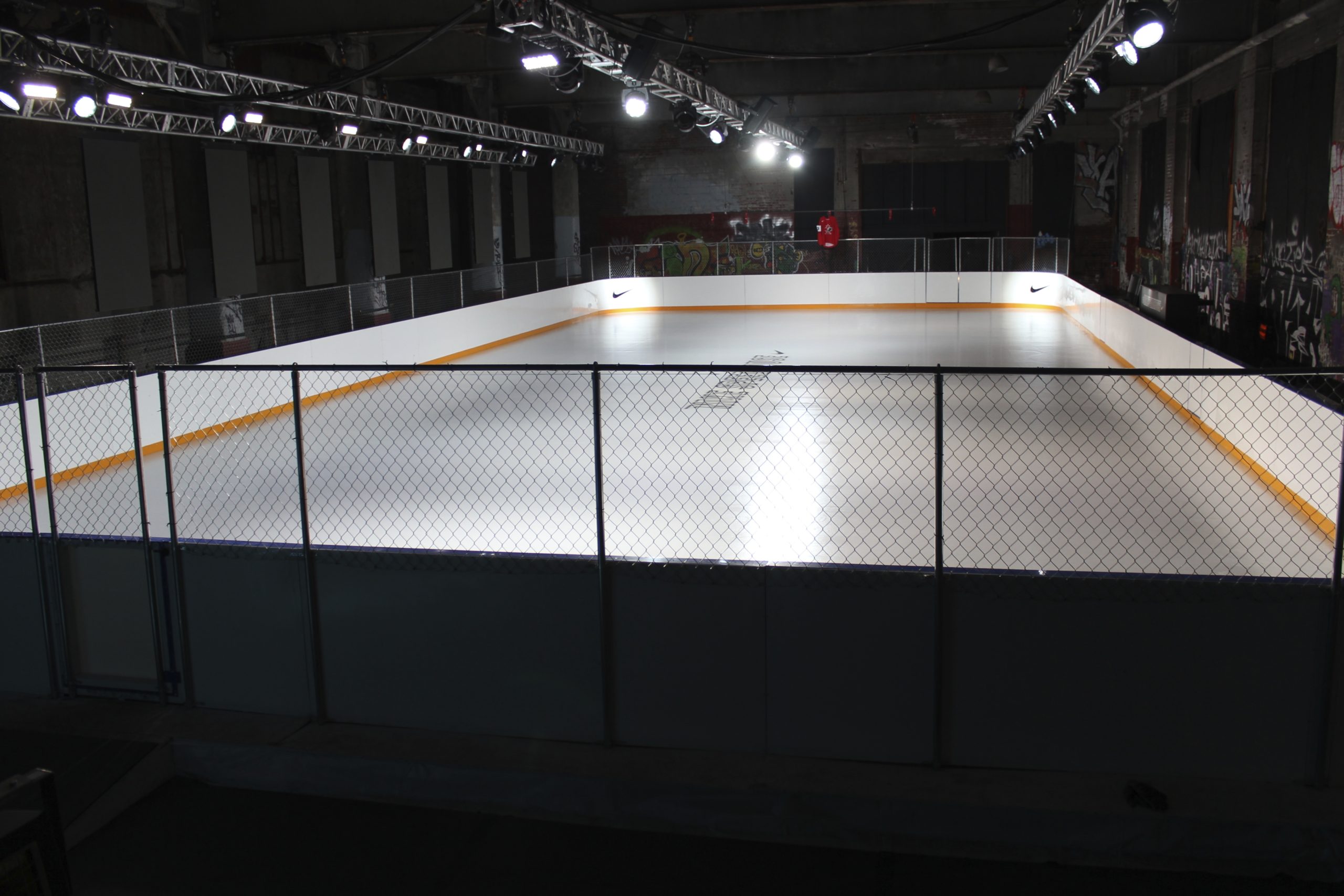
The brief was straightforward on paper: build a working ice surface inside a Toronto warehouse, on time, and keep the whole thing quiet until the players arrived. What made it unusual was everything else — the industrial floor with no drainage, the ambient heat load of an uninsulated building, the tight deadline, and the fact that none of it was a standard rink installation.
Our team was responsible for the full setup: ice surface, dasher boards, player benches, and locker room facilities. Twenty-four players had been scouted from the Canadian GTHL without being told what they were coming to — they found an ice sheet in a building that had never had one.
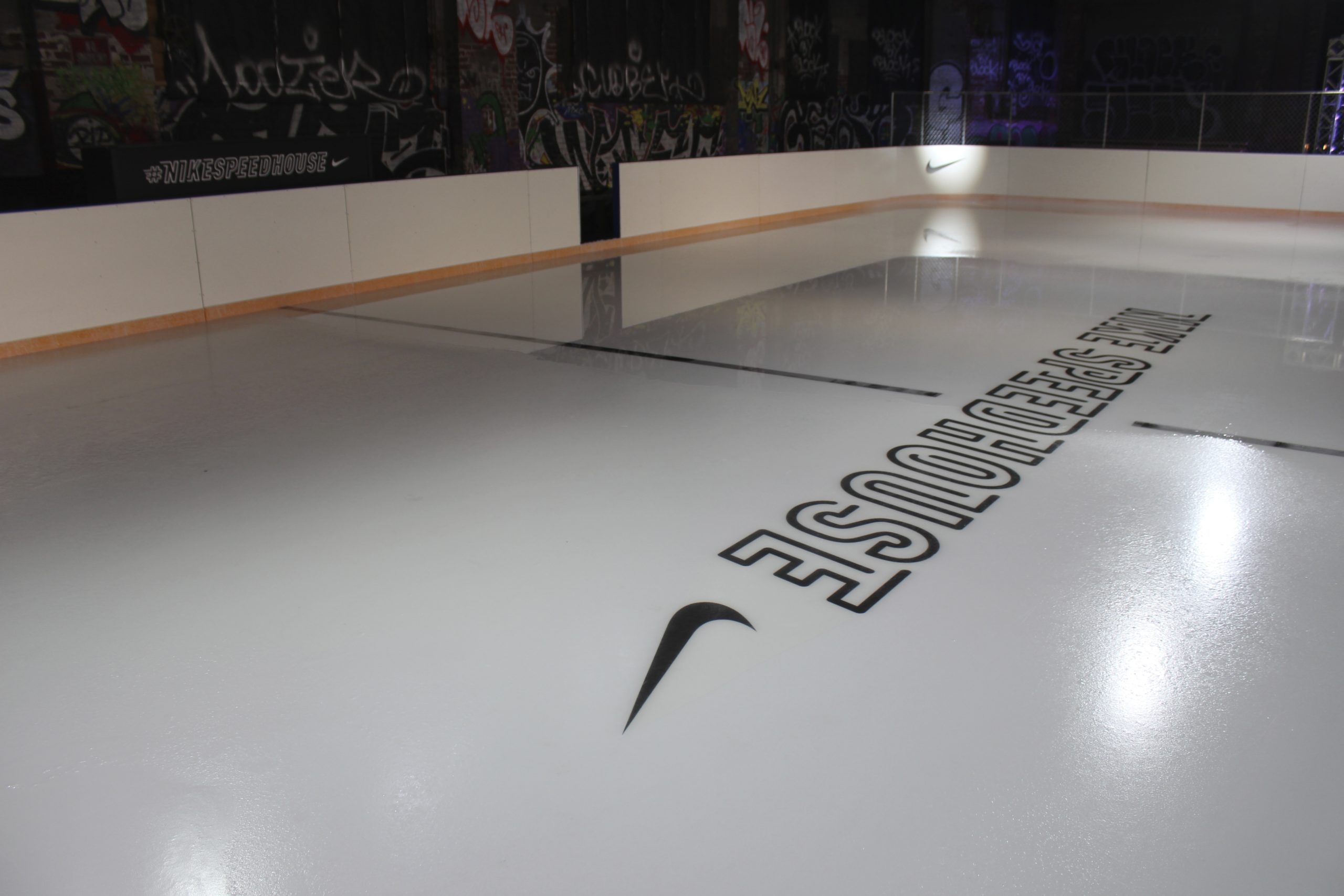
Building ice where there is no infrastructure
Getting refrigerated ice into a building that was never designed for it means solving a different set of problems than a standard installation. Ambient temperature management, glycol system sizing for the heat load, drainage planning with no floor drains, and dasher board anchoring on an uneven concrete surface — all of it had to come together within a tight window.
The refrigeration approach was portable by design. Chillers positioned outside, glycol lines run through the building, floor mats laid on top of a leveled surface. The process is the same whether you are doing a backyard rink or a brand activation in a warehouse — the variables are just different, and the margin for error is tighter when there is an audience arriving at a specific time.
Why this project matters
Projects like the Nike Speedhouse are not typical, but they are a useful test. The same principles that let us build reliable ice in a warehouse — portable refrigeration, careful site preparation, fast turnaround — are what make unconventional installations possible anywhere. A fountain plaza, a tennis court, a parkade, a theme park: the fundamentals do not change.
It is not always a backyard in the suburbs. Sometimes it is a warehouse with a stopwatch.