
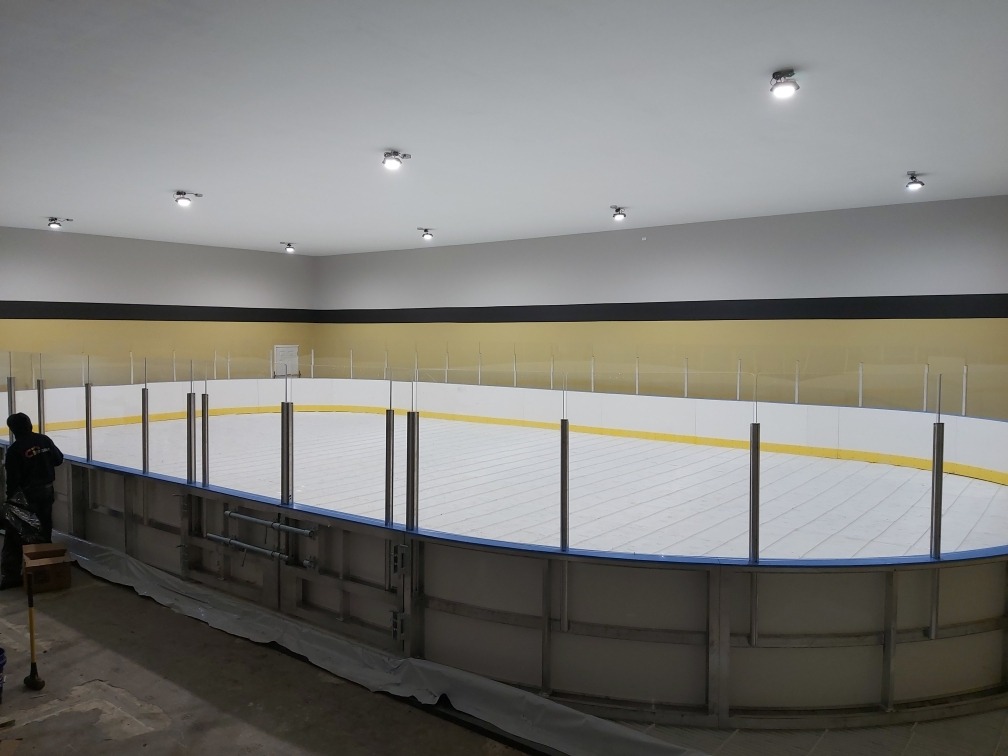
Most clients come in already knowing whether they want indoor or outdoor. The answer is usually driven by the property — there is a backyard, or there is a building, and the rink goes in one of them. But when there is a genuine choice, the decision comes down to four things: season length, ice quality, usage intensity, and budget.
Season length
An outdoor refrigerated rink in Southern Ontario typically runs from late October through mid-March, sometimes longer depending on the winter. Cold ambient temperatures actually help — the refrigeration system does less work when it is -10°C outside than when it is +5°C.
An indoor rink runs year-round if you want it to. The ambient temperature is controlled, which means more consistent ice conditions and no weather-related downtime. For serious training environments, that extra eight months of ice access changes what is possible.
Ice quality
Indoor ice is generally more consistent because you control the variables — humidity, ambient temperature, and direct sunlight are all managed. Outdoor ice is subject to whatever the weather brings on any given day. A well-sized refrigeration system handles most conditions, but a warm, sunny afternoon in February is harder to fight outdoors than it is inside.
For recreational skating, the difference is minor. For players training daily or running clinics, indoor ice quality consistency adds up over a season.
The practical reality
Most residential clients build outdoor rinks. Most commercial and institutional clients — arenas, training facilities, hotels — build indoor. The lines blur at the high end of residential: a large heated garage conversion or a purpose-built structure with HVAC is functionally an indoor rink even if it started as a backyard project.
The right answer is the one that fits the property, the budget, and how the ice is actually going to be used. If you are not sure, that is the conversation to have before a line goes on paper.