
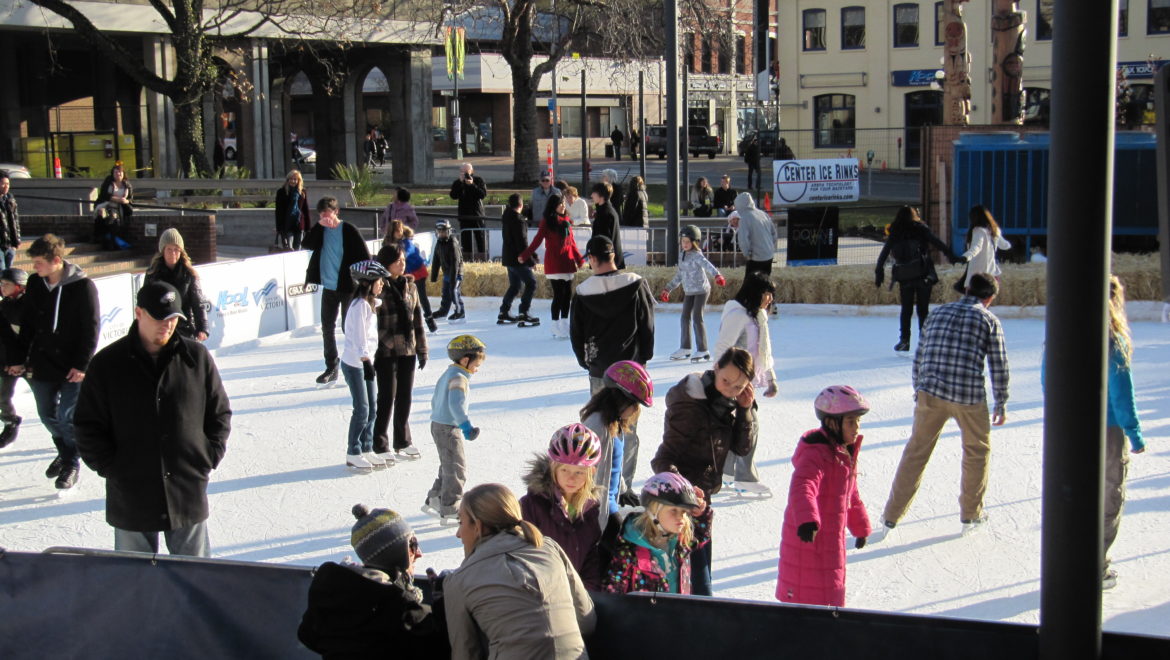
The average winter temperature in Victoria hovers well above freezing. Consistent natural ice is not something the city can count on — and historically, that meant outdoor skating was not something Victoria had. The Centennial Square installation was a direct answer to that problem: build the ice mechanically, control it reliably, and open it to the public regardless of what the weather is doing.
The project drew significant media coverage both at opening and through the season. For a city that had never had a downtown outdoor rink, the response confirmed something we already knew from other installations in mild climates: the demand for public skating is not dependent on cold weather. People skate where good ice exists.
Refrigerated ice in a warm-climate market
The Centennial Square installation demonstrated something important for municipal clients considering outdoor rinks in non-traditional markets: the refrigeration technology scales down to the size and budget of a community installation, not just a commercial venue. You do not need a theme park contract to have quality public ice in a temperate city.
Chiller sizing for a municipal outdoor rink in a mild climate is calculated differently than a cold-weather installation — ambient heat load is higher, and the refrigeration capacity needs to account for that. Getting the specification right is the difference between ice that holds and ice that softens mid-afternoon on a sunny day in January.
A first season that led to more
The 56×36 ft rink operated for approximately one month and attracted over 5,000 skaters. At roughly $60,000 to run for the season, the cost per visitor worked out to around $12 — a number that looks very different once you factor in the economic activity and goodwill a public rink generates in a city that had never had one.
By the time the season closed, organizers were already asking the same question: why didn't we build it bigger? The demand had been there from day one. As reported by the Times Colonist, discussions about a larger surface for the following year started before the ice had even come down. A rink that draws five thousand people in its first month is not a novelty — it is a permanent amenity waiting to happen.