
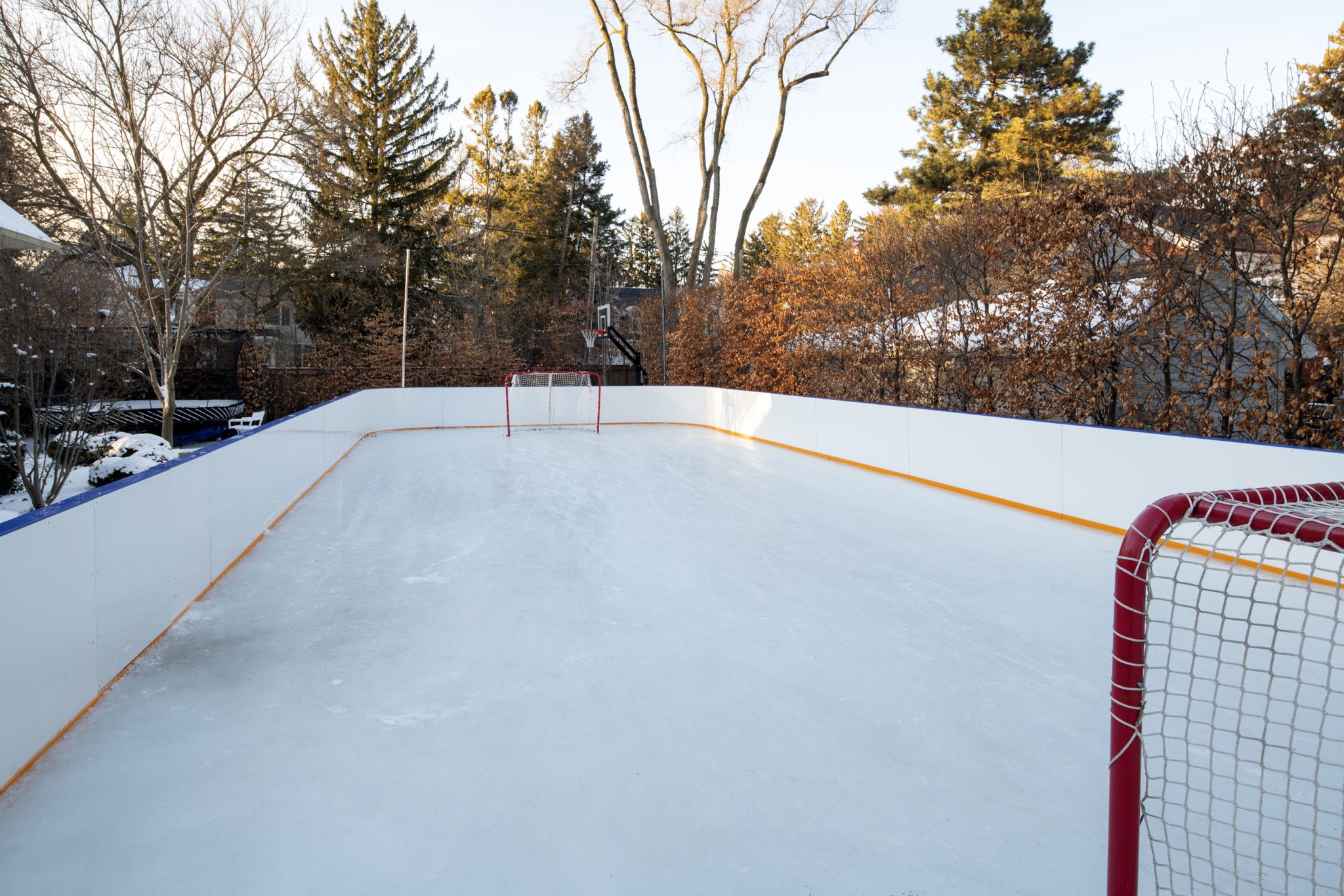
The first question most people ask is about the upfront number. That is the wrong starting point. A refrigerated backyard rink is a capital purchase with a long service life — the right comparison is not what it costs this season, but what it delivers over 10 to 15 years of use.
The variables that drive cost are: rink size, site conditions, refrigeration system type, board and glass specification, and any subfloor work required. The combination of those factors produces a range that is genuinely wide — a compact recreational surface looks very different from a full-size training sheet with tempered glass and boards.
What you are actually buying
A refrigerated rink has three main components: the refrigeration system (chiller, pump, glycol), the rink floor (piping mats or panels), and the structure around it (boards, hardware, gates). Each of those has a quality spectrum, and the specification should match how the rink is going to be used.
A family recreational surface needs different specifications than a rink used daily for competitive training. Oversizing the refrigeration system for recreational use adds cost without adding benefit. Undersizing it for a training sheet means fighting for ice quality all season.
The annual operating cost
Beyond the initial installation, a refrigerated rink has ongoing costs: electricity to run the chiller, glycol top-ups, annual service, and storage if you are not leaving the equipment in place year-round. These are predictable and manageable — and they are a fraction of what comparable ice time at an arena would cost over the same period.
For families and players who use the ice regularly through the winter, the math tends to work in the rink's favor within the first few seasons. The real cost is the one you can plan for — not the one that surprises you mid-January when you are waiting on ice time that is already booked.